

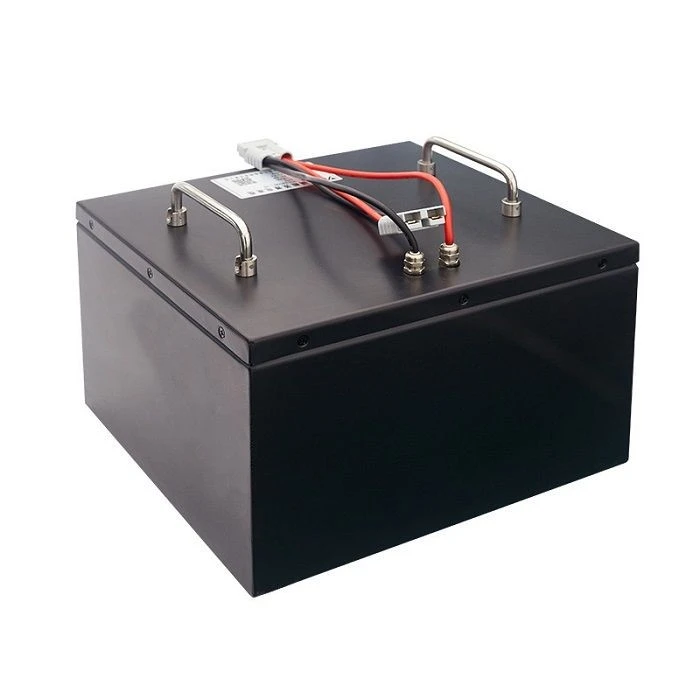
Operating electrical equipment in sub-zero environments introduces unique challenges that standard energy storage cannot resolve. Industrial low-temperature lithium iron phosphate (LiFePO4 / LFP) battery packs are engineered to provide dependable, rechargeable power where freezing temperatures impair standard electrochemistry.
A successful low-temperature power system requires a holistic engineering approach. True cold-weather reliability depends on harmonizing cell chemistry, internal resistance, dynamic discharge profiles, low-temperature charging limits, thermal management architecture, and advanced Battery Management System (BMS) logic.
Key Product Specifications & Parameters
|
Technical Parameter |
Specification Framework |
|
Product Type |
Industrial low-temperature LiFePO4 battery pack |
|
Cell Chemistry |
Lithium Iron Phosphate (LiFePO4 / LFP) |
|
Rated Voltage |
Custom-engineered to project specifications |
|
Rated Capacity |
Configurable (Ah / Wh tailored to load demands) |
|
Nominal Energy |
Derived from confirmed voltage and capacity parameters |
|
Minimum Discharge Temperature |
Validated per selected cell and pack design |
|
Minimum Charging Temperature |
Governed by cell limits and thermal management integration |
|
Continuous Discharge Current |
Matched to equipment load profile |
|
Peak Discharge Current |
Verified with permitted duration and surge tolerances |
|
Charging Current Limits |
Optimized against cell chemistry and BMS safety parameters |
|
Thermal Heating System |
Optional / Configuration-dependent (active preheating matrix) |
|
BMS Protection Architecture |
Comprehensive protection (OVP, UVP, OCP, SCP, and thermal safeguards) |
|
Communication Protocols |
Optional (CANbus, RS485, RS232, or custom protocol integration) |
|
Enclosure & IP Rating |
Custom-engineered (e.g., IP65, IP67, ruggedized metal/plastic housings) |
|
Cycle Life |
Established via rigorous cell and pack-level testing standards |
|
Regulatory Compliance |
Verified per model, transport regulations, and target market standards |
Three Core Evaluation Criteria for Low-Temperature Applications
Procurement teams and design engineers evaluating cold-weather power configurations must assess three fundamental operating parameters:
Low-Temperature Discharge Capability: The usable capacity and sustained voltage under load at the absolute minimum ambient operating temperature. Internal resistance increases in cold conditions, making voltage sag under heavy continuous or peak loads a critical design factor.
Low-Temperature Charging Safeguards: The precise thermal thresholds governing permitted charging currents. Standard LFP chemistry risks lithium plating if charged below 0 deg C without specialized cell formulations or active preheating sequences.
Cold-Start Readiness: The system's operational protocol after prolonged exposure to sub-zero storage. Determining whether equipment must deliver instantaneous startup power or initiate a controlled thermal preheating cycle prior to discharge is vital for system longevity.
Typical Industrial Applications
Automated Guided Vehicles (AGVs) in Cold Storage: Powering material handling systems operating continuously within sub-zero refrigerated logistics warehouses and food distribution facilities.
Remote Outdoor Environmental Monitoring: Sustaining weather stations, seismic monitoring equipment, and telemetry nodes exposed to severe winter conditions with solar or external charging.
Cold-Climate Industrial Backup Power: Providing reliable emergency backup for critical control cabinets, telecommunications infrastructure, and automated valves in arctic and high-altitude regions.
Mobile Utility & Municipal Machinery: Powering specialized outdoor service equipment, de-icing platforms, and agricultural machinery operating in freezing seasonal climates.
Global Compliance, Safety & Transport Standards
Procuring industrial energy storage requires strict adherence to international safety and transport frameworks. Confirmed compliance packages can be provided based on project target markets:
Transport Safety: UN38.3 compliance verified for safe lithium battery logistics (air, ocean, and land freight).
Electrical & Functional Safety: Designed in alignment with industrial standards such as IEC 62133, UL 1973, or CE directives depending on application scope.
Environmental Protection: Ingress Protection (IP) ratings certified from IP65 to IP67 for dust, moisture, and high-pressure washdown resilience.
Tailored OEM / ODM Customization Services & Workflow
Flexible manufacturing frameworks allow for comprehensive customization across multiple engineering domains. Our collaborative engineering process follows a structured roadmap:
Technical Consultation & RFQ Review: Joint evaluation of electrical parameters, environmental constraints, and mechanical form factors.
Engineering Design & Simulation: Thermal modeling, schematic drafting, and BMS software adaptation.
Prototype Fabrication & Sample Testing: Rapid sample build subjected to rigorous thermal and electrical validation.
Volume Manufacturing & Quality Control: Batch production supported by full traceability, cell grading, and post-assembly inspection protocols.
Frequently Asked Questions
Q: Can a LiFePO4 battery pack discharge safely at sub-zero temperatures?
A: Yes, depending heavily on the selected cell chemistry, internal resistance characteristics, and discharge current. However, available capacity and output voltage will decrease as ambient temperatures drop. Reviewing model-specific discharge curves is essential.
Q: Can a low-temperature LiFePO4 battery be charged below 0 deg C?
A: Standard LFP cells cannot be safely charged below 0 deg C due to the risk of metallic lithium plating, which permanently degrades capacity and causes internal short circuits. Charging below freezing requires either specialized low-temperature cell chemistry or an integrated, thermostatically controlled preheating system.
Q: What is the distinction between a low-temperature cell and a heated battery pack?
A: A low-temperature cell utilizes advanced chemistry formulations designed to maintain electrochemical performance under cold conditions. A heated battery pack incorporates active thermal management (such as heating films and temperature sensors) to raise internal temperatures into a safe operating and charging range prior to system activation.
Q: Does an integrated battery heater reduce usable system capacity?
A: Yes. Because heating elements draw power directly from the energy storage system (or an external source), their energy consumption impacts total system runtime. Thermal calculations must account for ambient temperature gradients, insulation efficiency, and warm-up duration.
Q: What certifications should be verified for industrial battery procurement?
A: Required certifications depend heavily on the application, transportation method (such as UN38.3 for lithium battery transport), and destination market regulatory frameworks (such as CE, UL, or IEC standards). Always request compliance documentation specific to the exact proposed pack configuration.


