

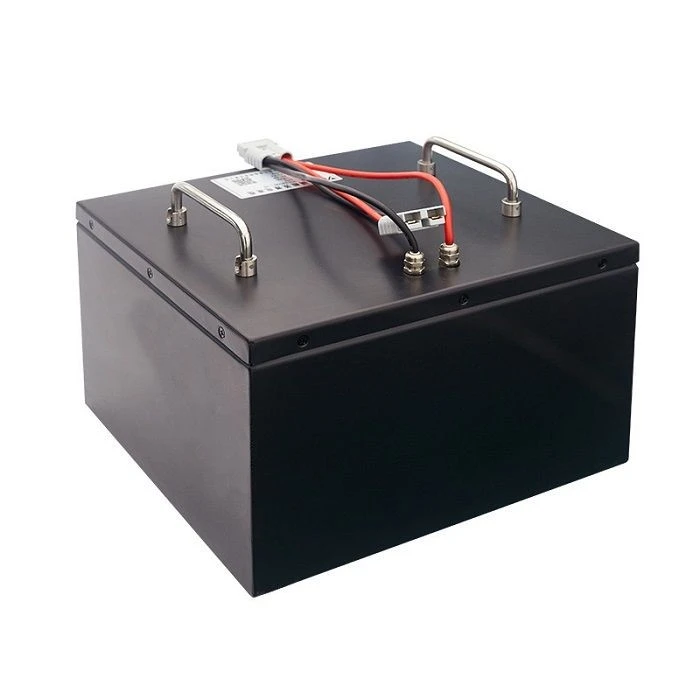
Industrial equipment operating in sub-zero environments demands more than standard power sources. This 24V low-temperature lithium battery pack is meticulously engineered for applications where ambient temperatures challenge conventional battery chemistry. By aligning cell configuration, thermal management, advanced Battery Management Systems (BMS), and mechanical interfaces with harsh operating realities, this system delivers dependable energy when performance matters most.
For equipment manufacturers, system integrators, and technical buyers, successful integration requires looking beyond nominal voltage and capacity. Cold-temperature discharge retention, charging safety thresholds, peak current delivery, thermal stabilization, and mechanical compatibility must be rigorously verified to ensure uninterrupted operation.
Technical Evaluation Matrix
|
Parameter |
Specification Details |
|
Product Classification |
24V Low-Temperature Industrial Lithium Battery Pack |
|
Nominal Voltage |
24V system class (exact operating voltage tailored to specification) |
|
Cell Chemistry |
Optimized for low-temperature electrochemistry (Customizable) |
|
Rated Capacity |
Application-specific (Configured in Ah based on load profiles) |
|
Nominal Energy |
Calculated via rated voltage and capacity; usable energy evaluated independently |
|
Continuous Discharge Current |
Validated against selected cell configuration and thermal limits |
|
Peak Discharge Current |
Specified with maximum allowable pulse duration |
|
Operating Temperature Range |
Certified discharge limits from validated test data |
|
Charging Temperature Range |
Strict lower/upper boundary definition with automated safeguards |
|
Low-Temperature Heating |
Integrated thermal management & automated warm-up logic (Optional) |
|
Battery Management System (BMS) |
Multi-layer safety protection, real-time telemetry, and communication interfaces |
|
Enclosure & Protection |
Robust housing material engineered for high vibration and specified IP ratings |
|
Terminals & Connectors |
Heavy-duty industrial connectors customized to equipment requirements |
Target Industrial Applications
Outdoor & Utility Equipment: Engineered to withstand prolonged winter exposure, wind-chill factors, and fluctuating ambient conditions without sacrificing startup reliability.
Cold Storage & Logistics: Designed for Automated Guided Vehicles (AGVs), forklifts, and mobile material-handling machinery operating continuously in sub-zero refrigerated warehouses.
Mobile Work Tools & Heavy Machinery: Tailored for high-peak-current demands, offering stable voltage output under aggressive industrial duty cycles.
Remote Monitoring & Autonomous Systems: Prioritizes ultra-low standby consumption, predictable long-term runtime, and reliable cold-starts in unattended locations.
Safety, Compliance & Transport Documentation
Transport Certification: UN 38.3 test summaries verifying safe handling for air, sea, and land logistics.
Safety & Performance Standards: Alignment with recognized industrial benchmarks such as IEC 62619 for secondary lithium cells and batteries.
Environmental & Quality Controls: Manufacturing quality verification reports and traceability documentation matched to the exact finished pack configuration.
Lifecycle, Maintenance
Evaluating long-term project viability requires analyzing operational longevity and maintenance requirements beyond initial procurement:
Thermal Stress & Cycle Longevity: Advanced cell chemistry and intelligent thermal controls mitigate capacity fade caused by repeated sub-zero exposure, preserving calendar and cycle life.
Zero Routine Maintenance: Unlike flooded alternatives, these solid-state integrated systems require zero electrolyte top-ups, terminal cleaning, or active physical servicing during their operational lifespan.
Quality Control & Batch Consistency
To bridge the gap between prototype approval and mass production, rigorous manufacturing quality gates ensure absolute uniformity:
Incoming Cell Grading & Matching: Strict impedance and capacity sorting ensure perfectly balanced parallel and series cell strings.
Automated End-of-Line (EOL) Testing: 100% factory stress-testing verifying short-circuit protection, cut-off accuracy, and telemetry responsiveness.
Lot Traceability & Change Control: Full serial-number tracking for cells and BMS firmware guarantees high batch consistency for long-term OEM programs.
Streamlined Engineering & Customization Workflow
For OEM projects requiring specific form factors, proprietary wiring, or specialized controller logic, a structured integration process ensures project success:
Specification Review: Technical alignment of electrical loads, thermal envelopes, and spatial boundaries.
Design & Simulation: Engineering validation of BMS parameters, thermal heating budgets, and mechanical housing fits.
Prototype Prototyping: Sample fabrication and rigorous bench or field testing under representative environmental conditions.
Volume Production: Final quality verification, change-control management, and scheduled delivery to target markets.
Frequently Asked Questions
Q: Can this low-temperature pack directly replace an existing 24V lead-acid battery in legacy equipment?
A: While the nominal voltage matches, direct drop-in replacement requires auditing the existing charging profile, cut-off voltages, space dimensions, and peak-current demands. System adjustments may be needed to maximize lithium performance and safety.
Q: How does the integrated heating system draw power, and will it drain the battery when parked in the cold?
A: When configured with a thermal management system, heating power is typically sourced directly from the external charger during the pre-charge warm-up phase, or from the battery only when connected to a sufficient energy reserve, preventing accidental deep discharge during idle cold-soak periods.
Q: What critical details must be provided to initiate an engineering review or technical quotation?
A: Essential inputs include the equipment's continuous/peak current profile, the minimum ambient startup and operational temperatures, physical dimension constraints, connector preferences, and estimated annual volume.
Q: How are custom mechanical housings or proprietary communication protocols handled during development?
A: Engineering teams collaborate directly with project stakeholders to match custom enclosure molds, sheet-metal configurations, CANbus/RS485 communication protocols, and custom wiring harnesses during the preliminary design review phase.


