

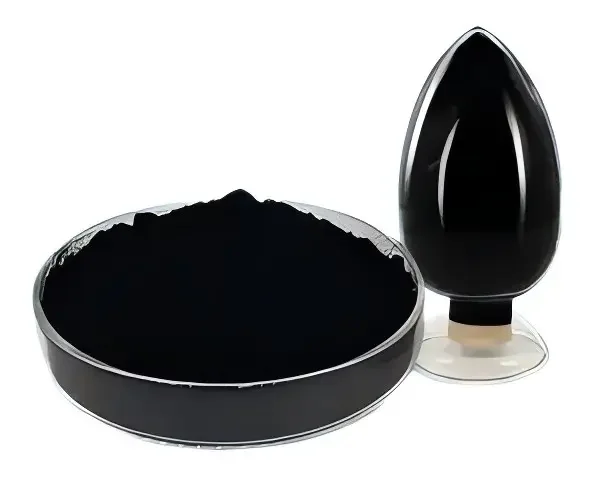
|
Item |
Unit |
Data |
|
|
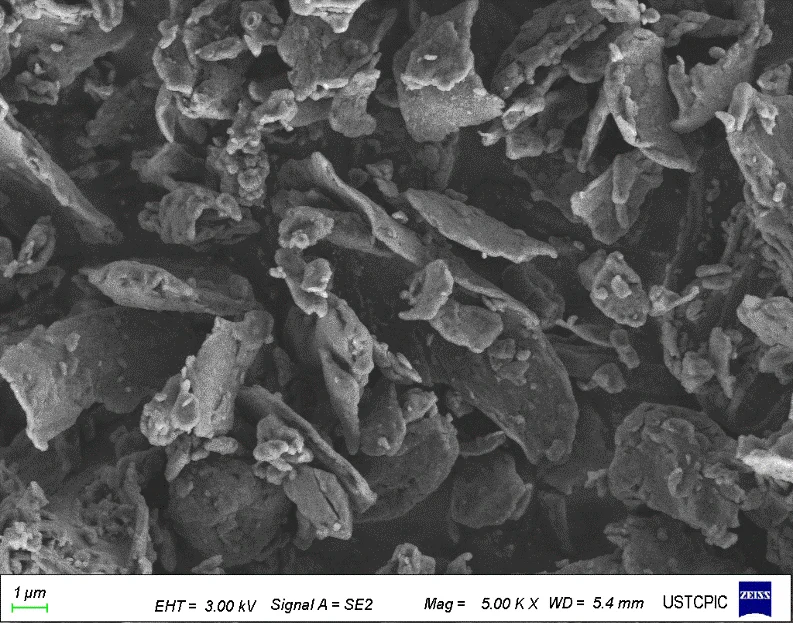
Particle-size distribution |
D10 |
μm |
2.41 |
|
D50 |
8.68 |
||
|
D90 |
15.64 |
||
|
D100 |
24.29 |
||
|
Ash |
% |
0.59 |
|
|
Tap Density |
g/cm² |
0.78 |
|
|
Specific Surface Area |
m2/g |
3.26 |
|
|
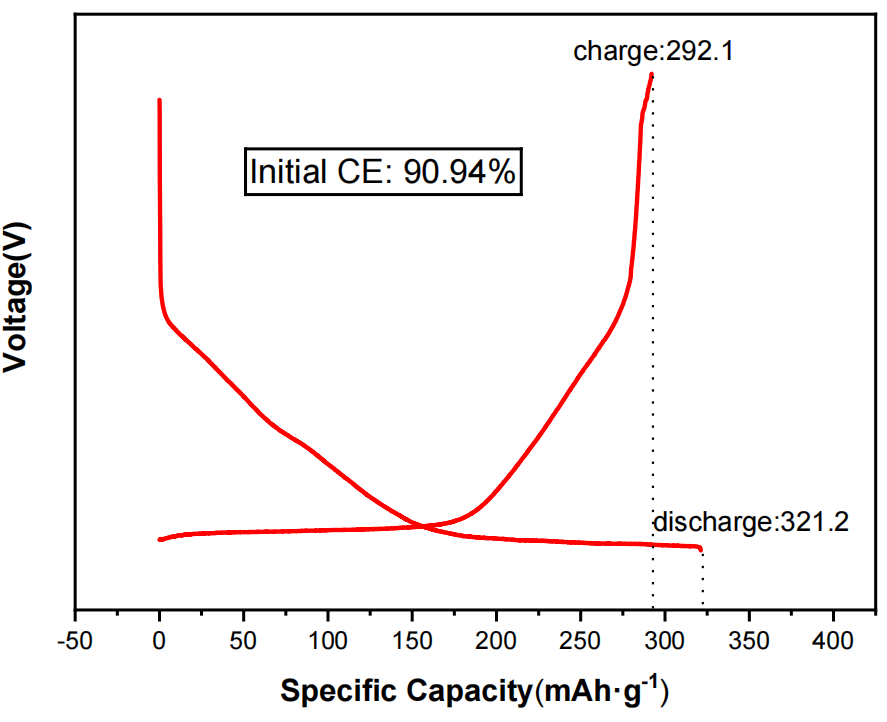
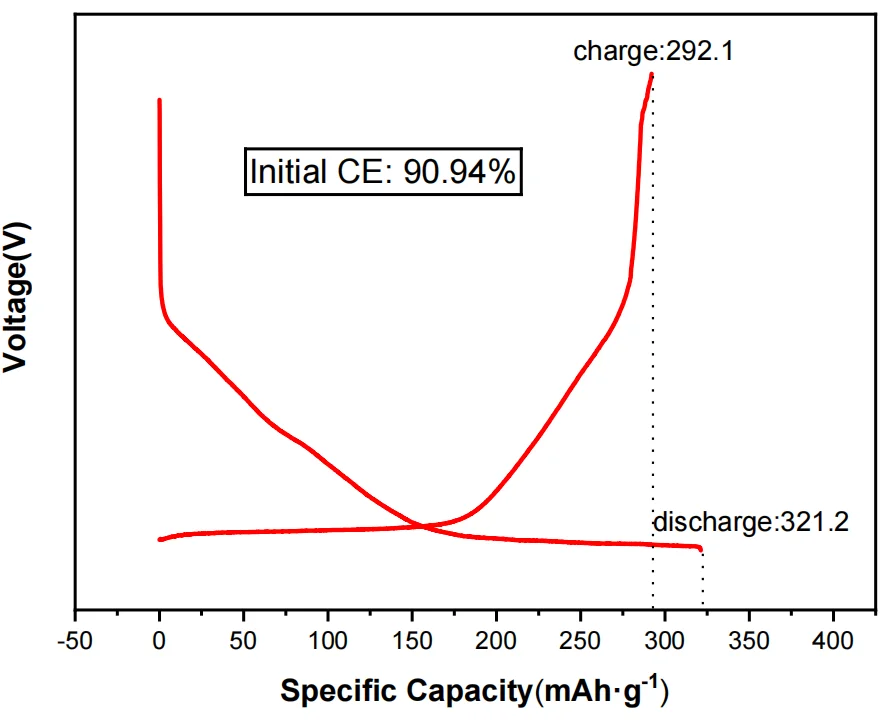
Capacity Pergram |
mAh/g |
321.20 |
|
|
Initial Coulombic Efficiency |
% |
90.94 |
|
| Item | Hard Carbon Anode | Graphite (Li-ion) |
| Initial Coulombic Efficiency | 88~92% | 90~95% |
| Cycle Life | 3000+ times | 1000+ times |
| -30℃ Capacity Retention | 85% | <50% |
| 5C Multiplier Performance | 92% | 70% |
Product Features
Wide range of raw materials
Hard carbon can be prepared from low-cost precursors such as biomass (e.g. coconut shell), asphalt, resin, etc. It avoids relying on graphitization high temperature process (energy consumption is reduced by more than 40%), and realizes the recycling economy model of "turning waste into treasure".
01
Strategic security of sodium resources
Sodium's crustal abundance (2.36%) is 360 times that of lithium (0.0065%), avoiding geopolitical risks of lithium resources.
Hard carbon anode mass production cost is 30-50% lower than lithium graphite
02
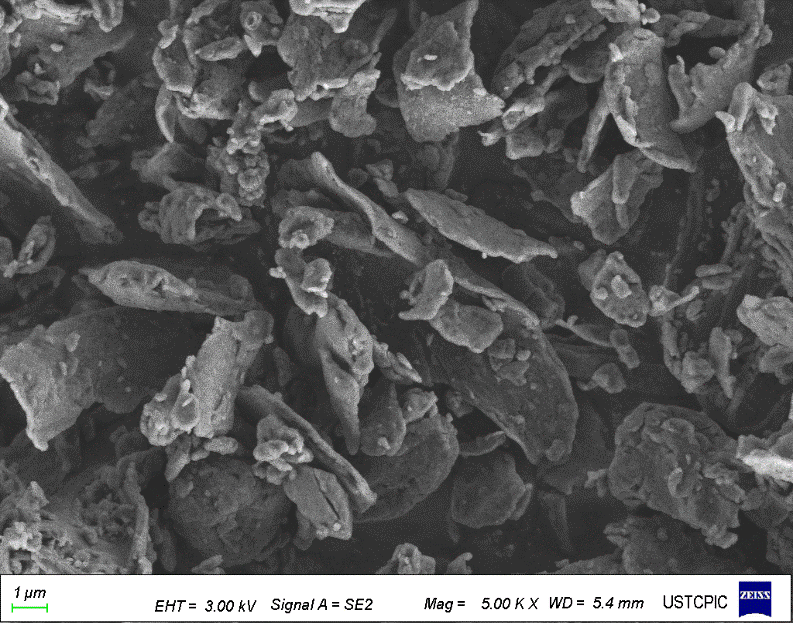
Unique pore layer structure
Disordered carbon layer (d=0.38-0.42nm) > sodium ion radius (0.102nm), providing efficient embedding/de-embedding channels.
03
Improved thermal stability
Thermal decomposition temperature>400℃ (graphite negative electrode: decomposition starts at 300℃), no thermal runaway through UL 1973 pin-prick test.
Biomass materials are widely available, green, and have their own rich heteroatoms and unique microstructures, which can be used as precursors for the preparation of hard carbon. For example, grapefruit peel, peanut shells and corn stalks can be used to prepare hard carbon materials. After carbonization, these materials help to enhance the lithium embedded capacity and cycling stability of the materials due to their unique pore structure.
product Application

Anode Materials for Batteries
Hard carbon materials are particularly used in the battery field, especially as anode materials for sodium ion batteries. Hard carbon anodes can store more charge in the same volume, improving the energy density and range of sodium ion batteries.
Supercapacitor Electrode Materials
Hard carbon materials are also commonly used as electrode materials for supercapacitors. Hard carbon is able to provide high capacitance performance and energy density, and is suitable for application scenarios that require fast charging and discharging and high power output.


