

Sodium-Ion Battery Anode Material
Your Professional Partner in Sodium-Ion Battery Innovation
As the transition toward sustainable, safe, and cost-effective energy storage accelerates, we empower researchers, cell manufacturers, and industrial developers with high-performance hard carbon anode powders and pre-coated electrode sheets.
Whether you are screening active materials for a next-generation sodium-ion chemistry, optimizing an existing slurry formulation, or qualifying a reliable supply chain for mass production, our portfolio is engineered to match your precise electrochemical targets and manufacturing processes.


Technical Specifications
|
Parameter |
Unit |
Why It Matters for Your Process |
|
Reversible Specific Capacity |
mAh/g |
Indicates practical reversible sodium storage under defined testing protocols. |
|
Initial Coulombic Efficiency (ICE) |
% |
Dictates first-cycle irreversible sodium loss and full-cell sodium inventory planning. |
|
Particle Size Distribution (PSD) |
μm |
Governs powder handling, slurry stability, and coating micro-uniformity (D10, D50, D90). |
|
Tap Density |
g/cm³ |
Influences powder packing efficiency and volumetric energy density targets. |
|
BET Specific Surface Area |
m²/g |
Correlates with surface reactivity, solid electrolyte interphase (SEI) formation, and ICE. |
|
Moisture & Ash Content |
% |
Critical for stringent moisture control and minimizing inorganic trace impurities. |
|
Compacted Electrode Density |
g/cm³ |
Benchmarks electrode mechanical integrity and calendering behavior. |
Why Choose Our Hard Carbon?
Strict Batch-to-Batch Traceability
Rigorous monitoring of particle size distribution (PSD), ash content, and moisture levels to guarantee reproducible slurry behavior.
Transparent Technical Documentation
Comprehensive TDS, Certificates of Analysis (COA), and standardized electrochemical test protocols.
Application-Driven Engineering Support
Direct access to battery application specialists to help you navigate ICE optimization, electrode loading, and full-cell balancing.
Product Formats Tailored to Your Development Stage
Hard Carbon Anode Powder (Active Material)
Engineered for material screening, proprietary formulation development, and high-rate coin/pouch-cell evaluation.
Key Monitored Metrics: Reversible specific capacity, Initial Coulombic Efficiency (ICE), tap density, and BET specific surface area.
Compatibility: Optimized for standard binders (CMC/SBR, PVDF), conductive additives, and both carbonate- and ether-based electrolytes.
Hard Carbon Anode Electrode Sheets (Pre-Coated)
Accelerate your screening timeline without the overhead of in-house slurry mixing and coating.
Customization Options: Choice of current collector foils, single/double-sided coating, active mass loading, and calendering density.

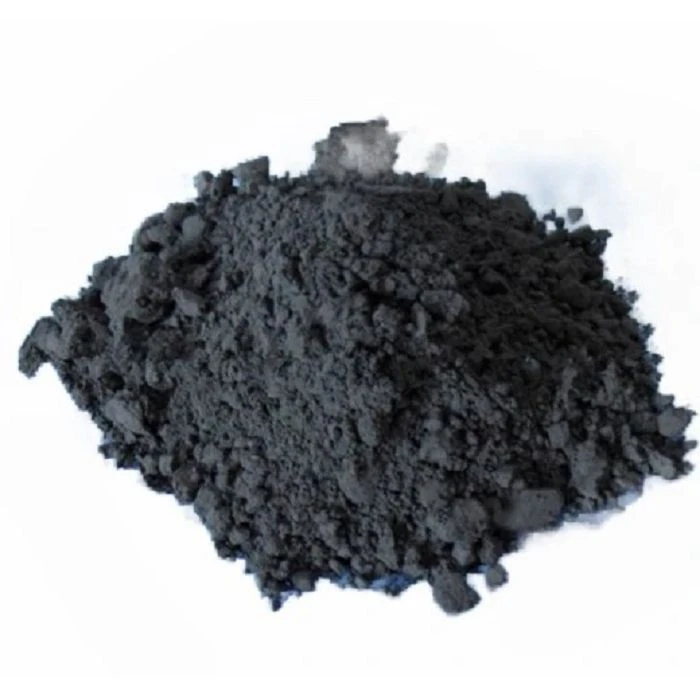
Our hard carbon materials are qualified across diverse high-growth sectors:
Stationary Energy Storage Systems (ESS): High cycle life and long-term electrochemical stability for grid and home storage.
Electric Mobility & Light Electric Vehicles (LEVs): High-rate capability and wide-temperature performance for e-bikes, micro-mobility, and industrial trucks.
Advanced R&D & Pilot Lines: Consistent baseline active materials for university laboratories, national research institutes, and emerging cell manufacturers.
We maintain rigorous quality assurance backed by advanced in-house characterization and electrochemical testing laboratories. Every production lot undergoes multi-parameter verification before shipment to ensure strict compliance with your specifications:
Microstructural and Morphological Analysis: Field Emission Scanning Electron Microscopy (FE-SEM) for precise particle morphology and structural observation.
Crystallographic and Phase Analysis: X-Ray Diffraction (XRD) to evaluate carbon turbostratic disorder and interlayer spacing (d002).
Physical and Surface Metrology: Laser diffraction particle size distribution (PSD), BET specific surface area analysis, helium pycnometry for true density, and automated tap density testing.
Electrochemical Validation: Automated half-cell and full-cell testing systems for routine verification of reversible specific capacity, initial Coulombic efficiency (ICE), rate capability, and cycle retention.


Sodium-ion hard carbon materials demand rigorous moisture protection and safe handling during international transit. We ensure your materials arrive in pristine condition:
Moisture-Barrier Packaging: Multi-layer moisture-proof vacuum aluminum foil packaging combined with inner polyethylene (PE) bags to prevent ambient moisture adsorption.
Flexible Quantities: Available in standard laboratory sample sizes up to industrial bulk drums or custom super-sacks.
Global Shipping and Regulatory Support: Provided with complete Non-Dangerous Goods declarations (or compliant hazardous materials documentation where applicable), Material Safety Data Sheets (MSDS/SDS), and full export customs clearance documentation.
Recommended Storage Guidelines: Store in a cool, dry, well-ventilated environment away from direct moisture and humidity sources. Keep containers hermetically sealed when not in use.
FAQ
As one of the most professional sodium-ion battery anode material suppliers in China, we're featured by quality products and good price. Please rest assured to wholesale sodium-ion battery anode material in stock here from our factory. Contact us for customized service.